How thick were each of the plates?
Many early descriptions of the golden plates state that the individual plates were about the thickness of "common tin." The following is a brief explanation of what the documentary record tells us about the thickness of early nineteenth-century tinplate.
Tinplate is thin sheet metal coated in tin. In the 19th and early 20th centuries it was used to manufacture items such as household utensils, cans for food, lanterns, buckets, and toys. It was valuable because unlike sheet metal, tinplate was resistant to rust. Up until the late 1800s the import of tinplate to America primarily came from Wales.
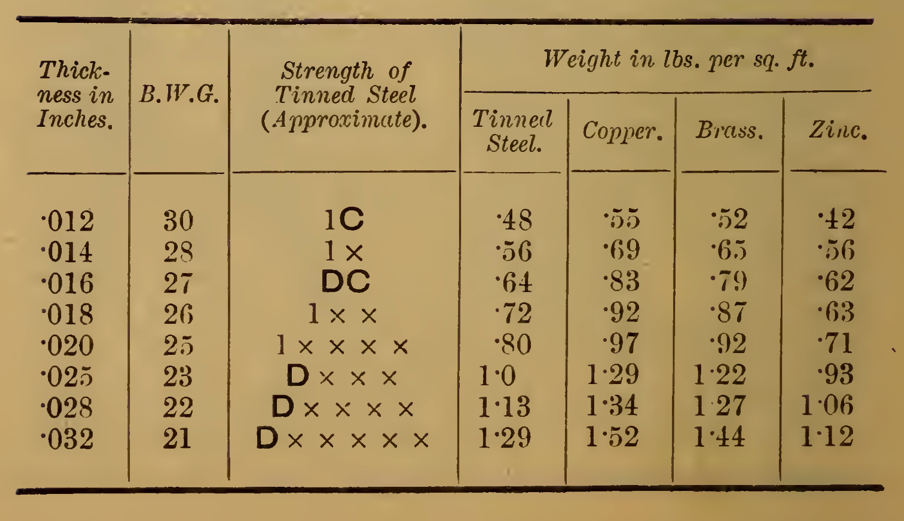
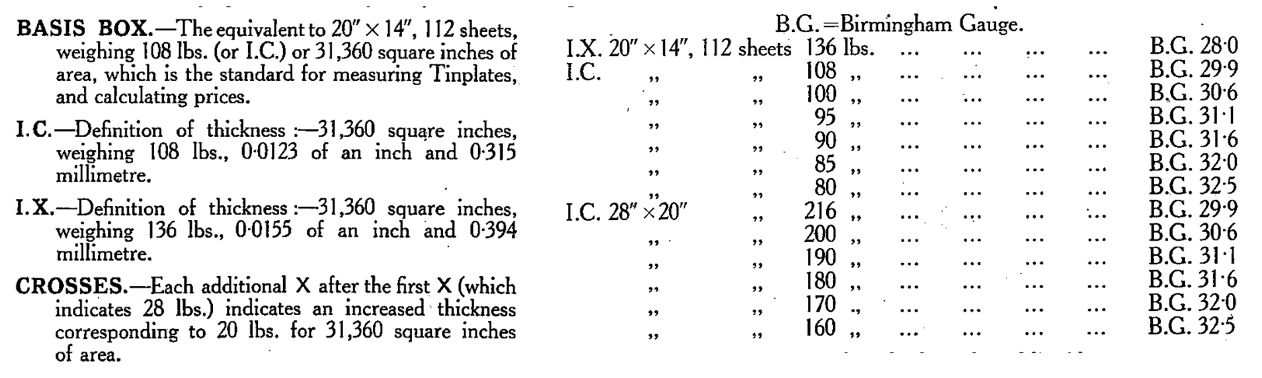
Standard units of measurement of tinplate thickness are expressed in somewhat cryptic terms, starting with "1C" or "one common" which is about 0.012" in thickness. The next standard thickness is "1X" or "one cross" which is about 0.013" in thickness. The next standard thicknesses is "2X" or "two cross" and so on. Tinplate is also measured using the Birmingham Wire Gauge scale. References and tables of units of tinplate measurements can be found in various records from the late 18th century through the early 20th century.
Units of Measurement of Tinplate| Thickness Label | Approximate Thickness in Inches | Thickness in BWG (Birmingham Wire Gauge) |
|---|---|---|
| 1C (one common) | 0.012" | 29.9 |
| 1X (one cross) | 0.013" | 28 |
| 1XX (double cross) | 0.016" | 26.8 |
| 1XXX (three cross) | 0.019" | 25.8 |
| 1XXXX (four cross) | 0.020" | 24.8 |
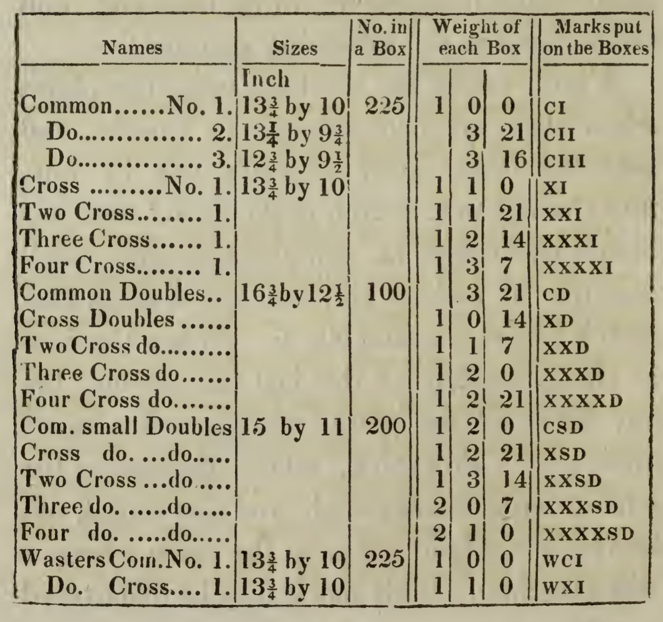
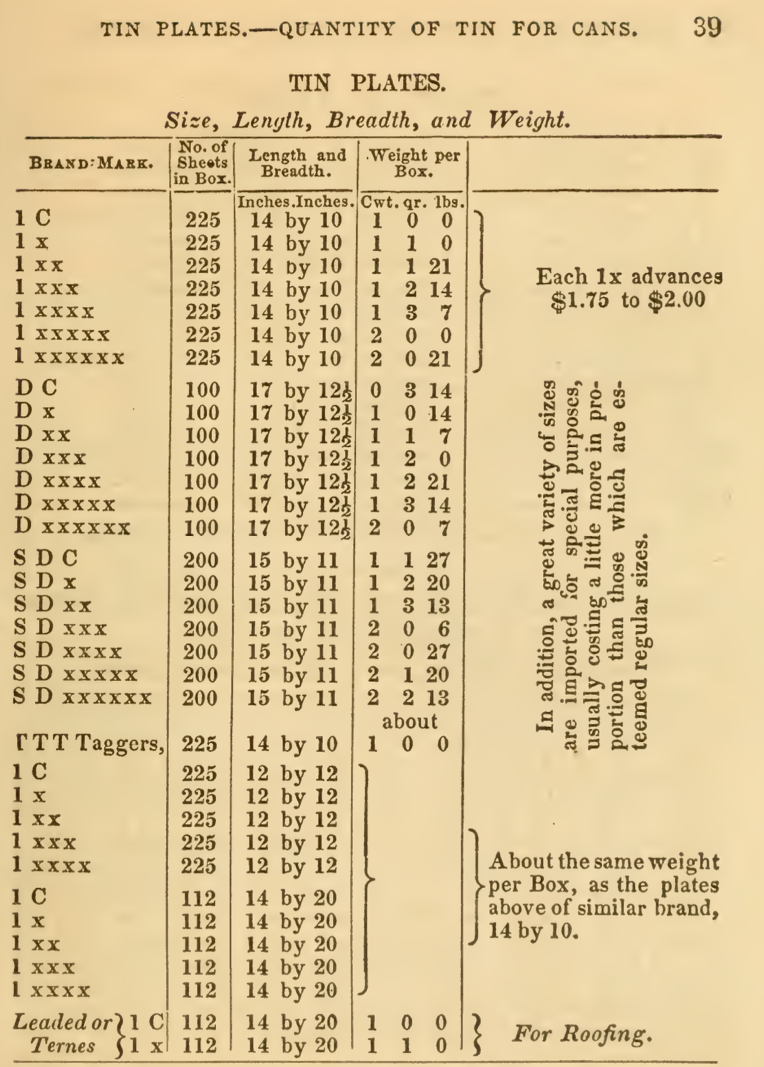
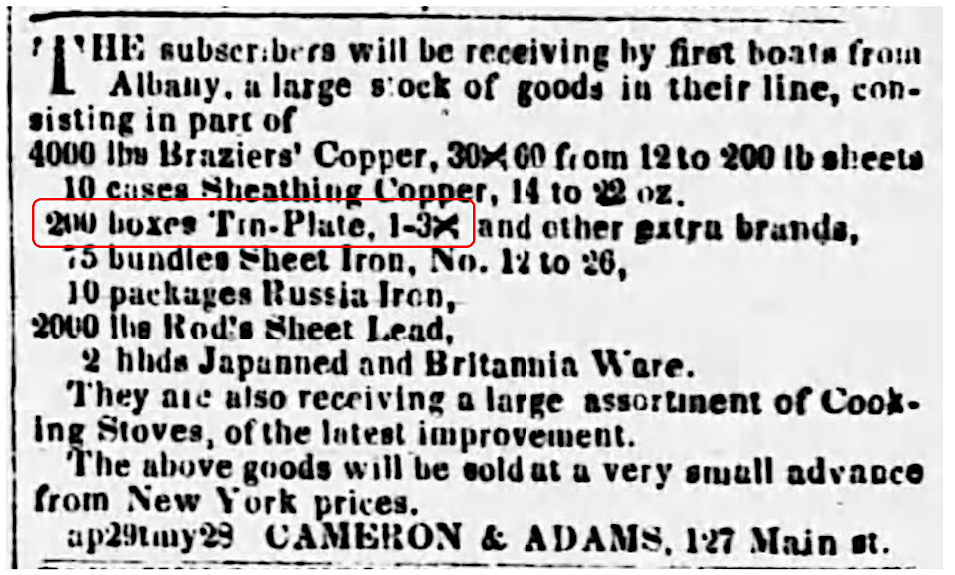
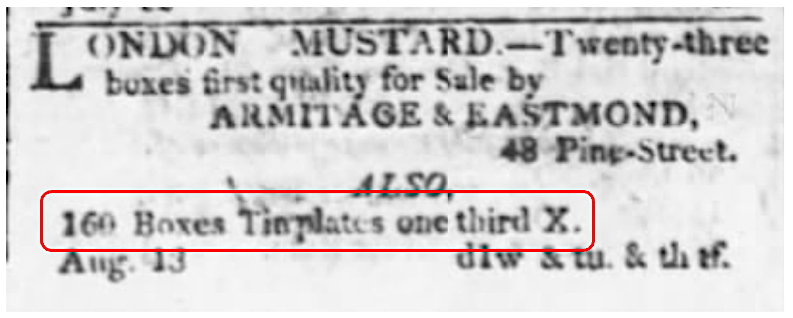
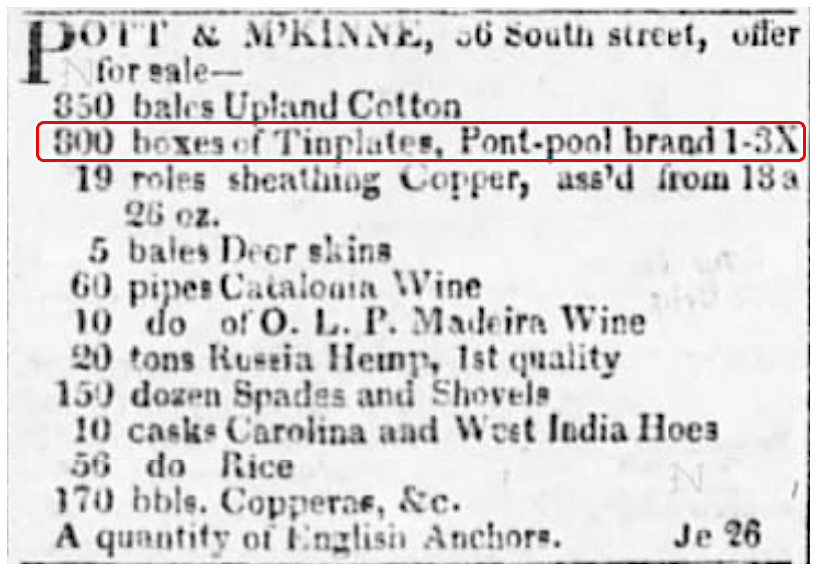
Archives of late eighteenth and early nineteenth century American newspapers contain only a few advertisements selling tinplate, but they are primarily of type 1XXX which is approximately 0.019" in thickness. Although this is not definitive, it supports the idea that "common tin" in early nineteenth-century America was likely to be of type 1XXX tinplate.
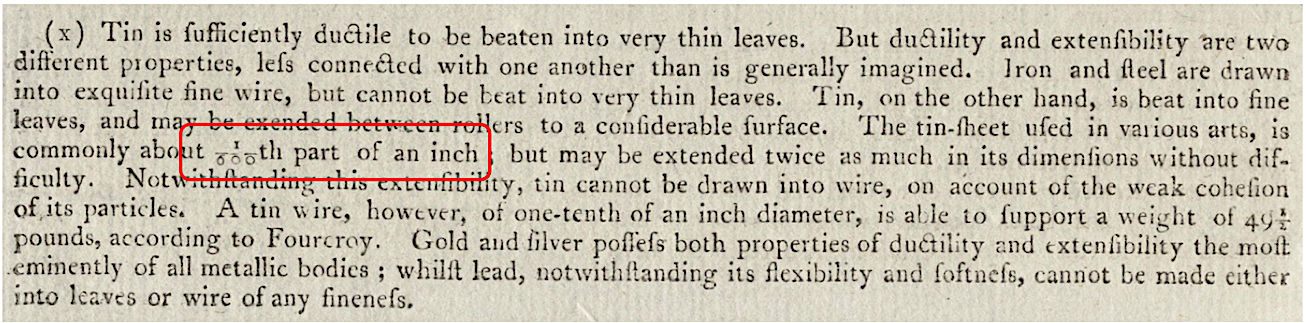
There is one important source in the documentary record related to the thickness of tinplate which seems to contain an error. The Encyclopaedia Britannica, or, A Dictionary of Arts, Sciences, and Miscellaneous Literature, vol. 12 (1797): 118 has a footnote which states that the "The tin-sheet used in various arts, is commonly about 1/600th part of an inch." 1/600th of an inch is approximately 0.0017" which is smaller than the minimum size on the Birmingham Wire Gauge scale, and is a thickness designation not found in tinplate catalogues in the 19th or early 20th centuries. It is reasonable to assume that the 1/600th entry was intended to be 1/60th of an inch (0.017") which approximates the 1XX or 1XXX standard tinplate thicknesses.